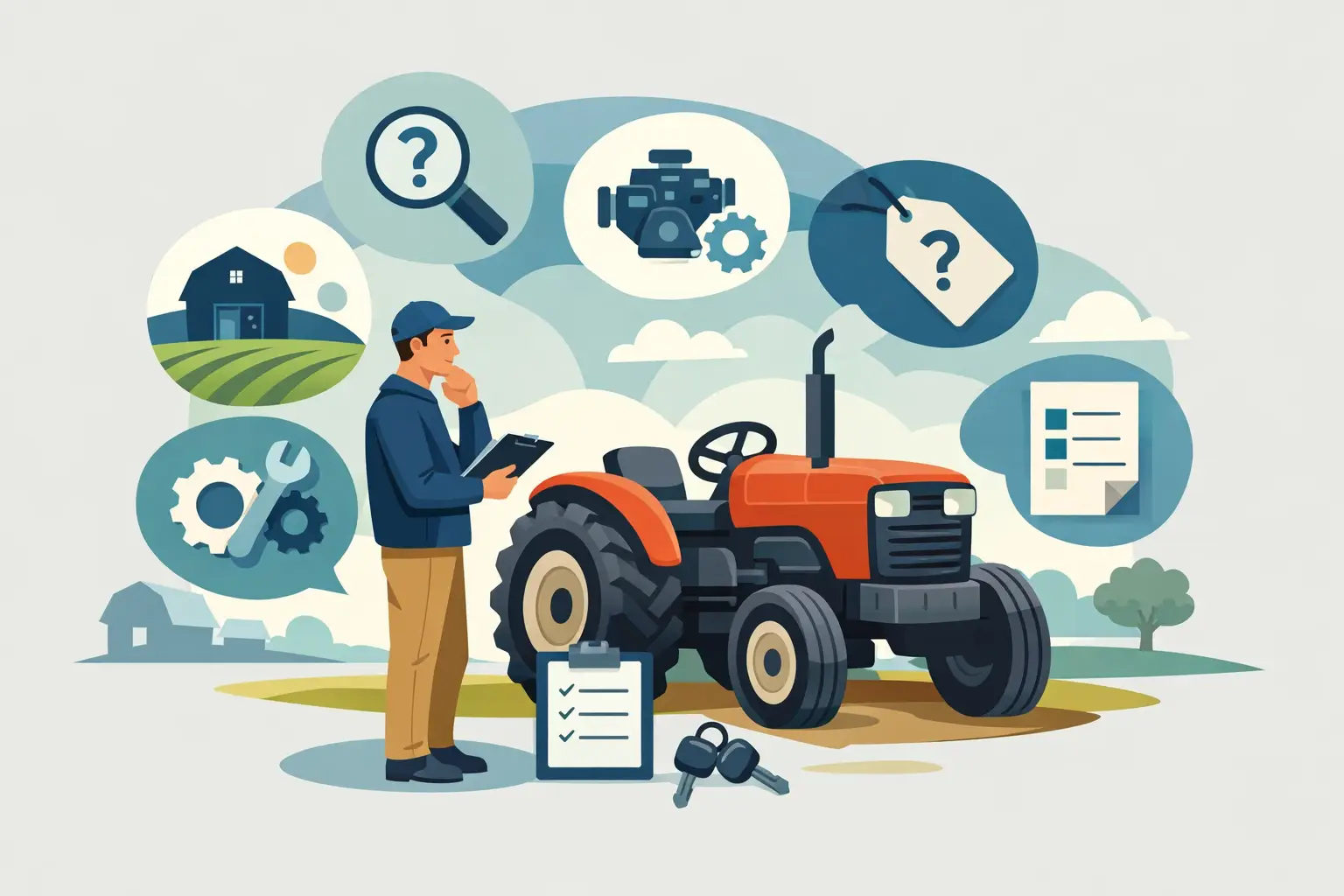
A used tractor can look right on paper and still be the wrong machine for the job. The biggest buying mistakes usually happen before anyone turns the key - when the buyer has not asked the questions that reveal hidden wear, poor specification fit, or expensive downtime risk.
If you are deciding what to ask when buying used tractor stock for farming, contracting or mixed fleet use, the aim is not to interrogate for the sake of it. It is to confirm that the machine matches the work, the budget and the operating reality on your site. A good seller should be able to answer clearly, with hours, specification details, service records and condition checks that stand up to scrutiny.
What to ask when buying used tractor stock
The first question is simple: what exactly has this tractor been doing? A machine used mainly for light yard work will often have had a different life from one that has spent seasons on heavy draft cultivation or transport. Hours matter, but workload matters just as much. Two tractors with similar hours can present very different wear depending on the jobs, operator habits and maintenance discipline.
Next, ask for the full specification, not just the headline horsepower. Transmission type, front linkage, PTO speeds, spool valves, tyre size, cab suspension, front axle suspension and braking setup all affect whether the tractor will fit into your operation without compromise. Buyers sometimes focus too heavily on power and age, then discover the machine lacks the hydraulic flow, road speed or linkage configuration needed for their implements.
Questions that reduce buying risk
How many hours has it done, and are those hours supported?
Recorded hours are one of the first figures any buyer looks at, but they should never be viewed in isolation. Ask whether the hours are showing on the dash, whether they are believed genuine, and whether there is supporting service history, inspection paperwork or previous ownership evidence. Low hours can be attractive, but not if the condition of pedals, seat, controls and linkage suggests a harder life than the meter indicates.
Equally, a tractor with higher hours is not automatically poor value. If it has been maintained properly, inspected carefully and priced accordingly, it can still be a reliable working asset. The question is whether the condition is consistent with the hours and whether key components have life left in them.
What service and maintenance history is available?
A seller does not always have a perfect file, especially with older machines, but there should be a sensible account of how the tractor has been maintained. Ask when the engine oil, filters, transmission oil and hydraulic oil were last changed. Ask whether any recent work has been carried out on the clutch, brakes, front axle, cooling system or electrical components.
This is often where confidence is built or lost. Vague answers such as "it runs fine" are not enough when the machine is going straight into productive use. You want evidence that normal maintenance has not been deferred and that obvious issues have been addressed before sale.
Has it had any major repairs or component replacement?
This question matters because major repairs are not always a negative. A documented gearbox rebuild or new clutch can be a positive sign if the work was done properly. What you need to understand is what was replaced, why it was replaced, and whether the repair points to a one-off issue or a pattern of hard use.
The same applies to engine work, turbo replacement, injector work or front axle repairs. A transparent seller should explain what was done and how recently. Hidden repair history is far more concerning than declared repair history.
Are there any faults, warning lights or known issues?
This should be asked directly. Does the tractor have any oil leaks, coolant leaks, electrical faults, gearbox issues, PTO problems, hydraulic weakness or cab function defects? Small faults are common in used machinery, but they need to be identified early so you can judge whether they are minor housekeeping items or signs of broader wear.
A practical buyer also asks whether any fault affects the tractor being ready to work immediately. That distinction matters. A cracked work light lens is one thing. Intermittent shuttle response or weak hydraulics is another.
Condition questions that matter on site
What is the condition of the tyres and running gear?
Tyres can materially affect the true cost of the purchase. Ask for tread depth, tyre brand, matching condition across the axle and any sidewall damage or repairs. If the tractor is heading straight into field work or road transport, tyre condition is not a cosmetic point - it is a cost and uptime point.
The same thinking applies to brakes, steering components, hubs and front axle wear. A tractor may present cleanly but still need money spending on running gear sooner than expected.
How are the hydraulics, PTO and linkage performing?
If the tractor will be running loaders, drills, trailers, mowers or other hydraulic equipment, ask whether all spool valves have been tested under load. Confirm the rear linkage lifts correctly, holds position and does not drop excessively. Ask whether the PTO engages smoothly and works across the required speeds.
These are functions that directly affect earning ability. A tractor that starts well and drives well can still be a poor buy if key hydraulic functions are weak or inconsistent.
Has the transmission been checked properly?
Transmission faults are among the most expensive used tractor problems, so this question deserves more than a quick yes or no. Ask how the tractor drives through the gears, whether the powershift or shuttle changes smoothly, and whether there is any hesitation, noise or slipping when warm.
It also helps to ask whether the machine has been tested beyond simple yard movement. Some faults only appear once the tractor is under load or at operating temperature. A proper inspection process should account for that.
Questions about suitability, not just condition
Is this tractor actually the right spec for my work?
This is the question many buyers leave too late. A good used tractor purchase is not just a matter of finding a clean machine at the right price. It needs to suit the implements, trailers, haulage routes and daily workload it will face.
If you are using front-mounted equipment, ask about front linkage and front PTO. If road travel matters, confirm transport speed and braking setup. If loader work is planned, visibility, shuttle response and hydraulic output deserve close attention. If the tractor is joining an existing fleet, compatibility with your current attachments and operator expectations also matters.
There is always a trade-off. A lower purchase price can be appealing, but not if you then have to adapt implements, accept slower output or face more downtime.
What inspection has been carried out before sale?
This is one of the most practical questions in the whole process. Ask whether the machine has been carefully inspected, what systems were checked, and whether the seller can provide a clear condition overview. An inspected tractor reduces uncertainty because the decision is based on verified function, not assumption.
For buyers working to tight schedules, that matters as much as the initial price. Time lost chasing faults after delivery quickly outweighs any saving made by buying the cheapest option.
Commercial questions buyers should not skip
What is included in the sale price?
Always confirm what the quoted price includes. Is it excluding VAT? Are there any attachments, extra wheels, weights or drawbar options included? Has any preparation work been done before sale? These details affect like-for-like comparisons between machines.
It is also worth checking whether there is flexibility if remedial work is required before dispatch. The headline figure is only one part of the buying decision.
How quickly can it be delivered, and who manages transport?
Availability is often why businesses buy used in the first place. Ask where the tractor is located, how soon it can be released, and who is responsible for transport. If the machine is coming from mainland Europe, managed logistics become even more important.
For many buyers, the best transaction is not simply the cheapest tractor. It is the machine that arrives on time, matches the agreed specification and starts work without delay. That is why sourcing, inspection and delivery should be treated as one buying process rather than three separate tasks.
Are finance options available if I want to preserve cash flow?
Even when the budget is available, finance can still be the right commercial decision. Ask whether hire purchase or lease options are available and how quickly they can be arranged. For some businesses, preserving capital for seasonal inputs, labour or other plant needs makes more sense than buying outright.
A supplier that can handle sourcing, inspection, finance and worldwide delivery removes friction from the process. That is particularly useful when you need a tractor quickly and do not want procurement to turn into a series of disconnected admin tasks. AGRORIG supports that model with carefully inspected machines, trusted suppliers and managed delivery.
The right used tractor usually reveals itself through the quality of the answers. If the seller can explain the machine's history, specification, condition and route to delivery clearly, you are much closer to a purchase that stays productive after it arrives.