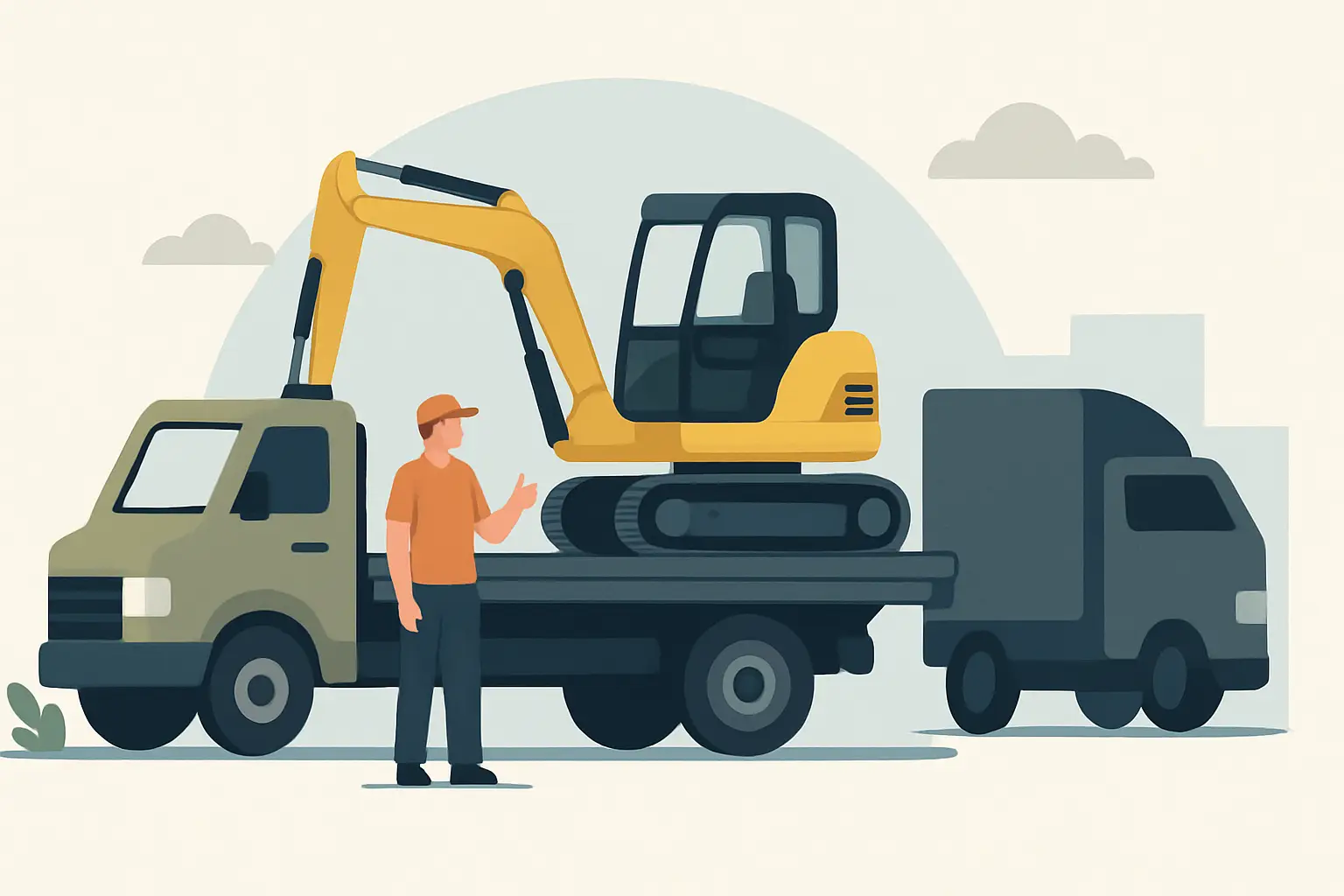
You can buy the right mini excavator and still lose days if delivery is treated as an afterthought. The machine turns up when the site is closed, the lorry cannot get in, the ramps are wrong for the ground, or the paperwork is missing so nobody will sign. For contractors and plant operators, that is not a minor inconvenience - it is downtime, labour cost, and a programme that slips.
A good mini excavator delivery service is not just transport. It is a controlled process that protects the machine, keeps you compliant, and gets it onto the ground with the basics confirmed so you can put it straight to work.
What a mini excavator delivery service should cover
At minimum, you are paying for safe loading, haulage, and offloading. In practice, you should expect a delivery plan that matches the machine, your site constraints, and the timing you actually need.
First is suitability of the transport. A 1.5–2.0 tonne mini and a 5–6 tonne mini are both "mini excavators", but they do not travel the same way. The transporter needs the right bed height, ramp angle, and payload margin, plus suitable restraints for the machine and any attachments.
Second is timing and communication. If the service cannot give you a realistic window, confirm the driver call-ahead procedure, and handle rebooking clearly, it is not a service you can build a programme around.
Third is handover readiness. You do not want to discover on site that the bucket pins are missing, the key is not present, the additional bucket has not arrived, or the machine cannot be driven off because the battery is flat. Delivery and inspection are connected - the logistics is only as good as the preparation behind it.
The delivery variables that change price and lead time
There is no single "standard" delivery, even within the UK. Cost and speed depend on what the carrier can consolidate, where the machine is coming from, and what offloading looks like at the other end.
Distance matters, but access matters more than most buyers expect. A straightforward kerbside offload with clear hardstanding is a different job to a tight residential lane, a soft verge, or a live construction site with traffic management.
Timing can be a trade-off. If you need a fixed morning slot on a specific date, you are asking the haulier to organise around you. If you can accept a broader window, it can often be combined with other drops and priced more efficiently.
Attachments add complexity. A single digging bucket strapped within the machine footprint is simple. Multiple buckets, breakers, quick hitches, or additional kits might need separate securing, palletising, or a second vehicle depending on weight and dimensions.
If the machine is sourced from continental Europe, lead time becomes a blend of preparation, collection, export paperwork where applicable, ferry or tunnel scheduling, and UK onward haulage. It can still be fast, but it has more moving parts and you want one party owning the chain end to end.
Site checks that prevent the usual delivery problems
Most delivery failures are predictable. They happen when nobody asks the practical questions early enough.
Start with access. Confirm road width, turning circle, overhead restrictions, and whether there are weight limits on bridges or private roads. If you are on a development with temporary surfaces, think about where the lorry will actually stand to offload. "We have space" is not a plan unless someone can describe it.
Then look at the offload point. You want firm, level ground with enough run-out distance for the machine to come down ramps safely. If it has been raining and the only option is soft ground, you may need track mats or an alternative offload area.
Finally, confirm who is receiving. A lot of projects lose time because the driver arrives and there is no competent person on site to sign for the machine, check it, and direct the offload. If the site has booking-in procedures, security gates, or restricted times, provide those details upfront.
Machine readiness: the checks that make "ready to work" real
Delivery day is not the time to discover a mechanical issue. Even with used equipment, you can reduce risk by insisting on basic functional verification before despatch.
At a minimum, you want the excavator to start cleanly, track and slew smoothly, and operate all hydraulics without obvious leaks. Check auxiliary hydraulics if you plan to run a breaker or auger. Confirm that the quick hitch type matches what you are expecting and that the supplied buckets are compatible.
Small items cause big delays. Make sure you have the key(s), any immobiliser codes where relevant, the manual if available, and details of grease points and service intervals. Fuel level matters too. Many deliveries arrive with minimal fuel for safety and weight reasons, which is fine, but you should know in advance so you are not sending an operator out with no diesel on site.
If you are buying used, ask for machine hours and clear specifications in writing, and make sure the delivery note matches what you agreed. It is much easier to resolve discrepancies before the machine has been moved around multiple sites.
Insurance, liability, and the moment risk transfers
A mini excavator is compact, but it is still a high-value asset. Clarify when responsibility transfers from the seller or haulier to you.
For many deliveries, risk transfers at the point of handover, which is typically once the machine is offloaded and signed for. That sounds simple until the offload is delayed, the machine cannot be driven off due to site conditions, or an attachment is missing. The right approach is to define the handover point and confirm what happens if the driver cannot complete the drop due to access or safety.
Check whether the transport provider's goods-in-transit cover is suitable for the machine value. If you are arranging your own insurance, ensure cover applies during transit and while the machine is being offloaded. This is not about paperwork for its own sake - it is about avoiding a dispute if something goes wrong on a tight programme.
UK delivery vs international delivery: what changes
UK mainland delivery is usually straightforward once access and timing are confirmed. International delivery adds administrative steps, but it is manageable when the process is controlled.
If the machine is moving between the UK and EU, you need accurate machine identification details and correctly prepared invoices and transport documentation. Delays most often come from missing or inconsistent information, not from the physical movement itself.
You also need to consider post-arrival expectations. If you are bringing a machine in from Europe for immediate deployment, plan for a quick visual check on arrival and allow a small commissioning window before it hits site. Even a well-prepared used excavator benefits from a short settling-in period where you confirm fluids, track tension, and any customer-specific requirements.
When "delivery included" is not the best option
Sometimes it is still worth arranging your own haulage. If you have a fleet of low-loaders or a preferred haulier who understands your sites, you may achieve tighter control on timing.
The trade-off is coordination risk. If you buy from one party and transport via another, you need clear collection protocols, loading responsibility, and a process for checking attachments and documentation at pick-up. If you cannot afford miscommunication, a managed mini excavator delivery service under one owner is usually the safer operational choice.
What to ask before you book
A reliable service can answer direct questions without hesitation. You are not being difficult - you are protecting your schedule.
Ask for the delivery window and whether it is a firm appointment or an estimated slot. Confirm the vehicle type and offload method. Check whether the quoted price includes waiting time, aborted delivery fees, or re-delivery charges if access is not possible.
Confirm what arrives with the machine. If you bought a set of buckets, a quick hitch, or a breaker line, make sure those items are listed and accounted for on the paperwork. If the excavator is being delivered with a grading bucket for a specific job, you do not want it turning up with only a digging bucket and a promise that "the rest is coming later".
How AGRORIG approaches delivery as part of the buying journey
For many buyers, the simplest way to reduce risk is to keep sourcing and inspection and logistics under one controlled process. When you purchase through a specialist that can verify condition, confirm specifications, and manage worldwide delivery, you are not relying on multiple parties to coordinate under pressure. That is the model at AGRORIG LTD: inspected used machines, transparent specs and hours, and end-to-end delivery planning so the excavator arrives ready to work.
The operational mindset: delivery is part of uptime
Mini excavators earn their keep through utilisation. If delivery fails, the machine is not "late", your whole operation is late. Treat delivery like you treat servicing: planned, confirmed, and owned by someone who understands the consequences.
The best results come from a simple discipline. Confirm access like a site manager, confirm readiness like a fitter, and confirm timing like a planner. When those three line up, delivery stops being a risk and becomes what it should be - a controlled step that gets a working machine onto the ground when you need it.