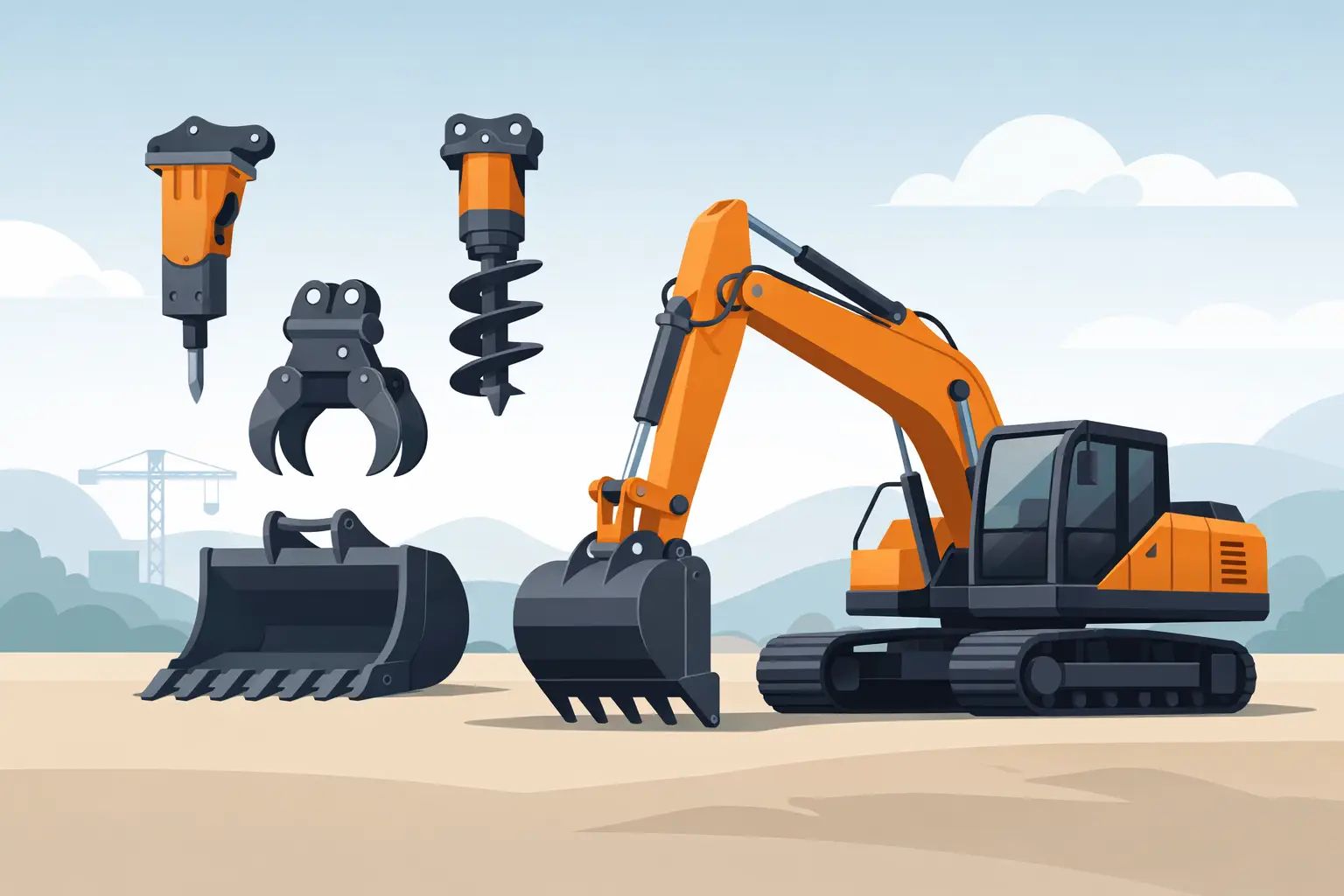
A 13-tonne excavator with the wrong attachment can slow a job more than an older machine with the right one. On site, that usually shows up as wasted passes, extra labour and avoidable fuel burn. The attachment often determines whether an excavator is genuinely productive or simply present.
This guide to excavator attachments and uses is written for buyers and operators who need equipment to earn quickly. Whether you run a construction fleet, manage civil works or source machinery for agricultural groundworks, the key is matching the attachment to the material, the cycle time and the machine itself.
Why attachments matter more than many buyers expect
Most excavator buying decisions start with operating weight, reach and hours. Those are sensible filters, but attachments have a direct effect on output, wear rates and job suitability. A machine that can switch efficiently between digging, breaking and handling can cover more work without adding another unit to the fleet.
That does not mean every excavator should carry every tool. Extra hydraulic requirements, coupler compatibility and balance all matter. A poor match can reduce breakout force, create instability or put strain on pins, bushes and hydraulic circuits. The best buying decisions are practical ones - choose the attachment package that suits your regular work, not just the occasional task.
A guide to excavator attachments and uses by job type
The simplest way to assess attachments is by the work you need completed. Digging, grading, demolition, lifting and material handling all place different demands on the machine.
Buckets for general excavation and finishing
Buckets remain the most widely used excavator attachment because they cover the core tasks - trenching, bulk digging, loading and finishing. Standard digging buckets are suited to general earthmoving and utility work. They are the default choice where material is mixed but not heavily compacted.
A trenching bucket is narrower and designed for cleaner, more controlled trench profiles. For drainage, pipe runs and cable installation, it usually produces a better result with less spoil to handle. That can save time on reinstatement.
A grading or ditch-cleaning bucket is broader and often lower profile. It is used for shaping banks, levelling and final trim. It will not replace a dedicated grading machine on every site, but for many contractors it is the most cost-effective way to improve finishing capability with an excavator already in the fleet.
Rock buckets and heavy-duty buckets are built for harsher environments. Reinforced wear strips, stronger side cutters and tougher construction help when working in abrasive ground or broken demolition material. The trade-off is weight. A heavier bucket can reduce lifting margin and alter performance on smaller machines.
Hydraulic breakers for demolition and hard ground
When concrete, asphalt or hard rock stops progress, a hydraulic breaker is usually the answer. Breakers convert the excavator into a demolition and ground-breaking tool, making them common on roadworks, foundation removal and quarry-related work.
The main consideration is sizing. An undersized breaker will be slow and frustrating. An oversized one can overstress the machine and reduce controllability. Hydraulic flow and pressure need to match the attachment properly, and the carrier must have enough operating weight to keep the tool effective.
Breakers also introduce higher wear and maintenance demands. Tool steels, bushes and hydraulic lines all need regular attention. If demolition is occasional rather than routine, many buyers are better served by sourcing a machine already set up for breaker work rather than adapting a standard excavator in a hurry.
Augers for drilling holes quickly
For fencing, planting, foundations and utility installations, augers offer a more efficient approach than improvised digging. They are especially useful on agricultural sites and mixed-use contracting work where hole spacing and consistent depth matter.
The key variable is soil condition. In loose ground, an auger can work very quickly. In rocky or compacted strata, performance depends heavily on the pilot bit and tooth setup. Buyers should also consider the torque requirements and whether extensions are needed for deeper holes.
On the right jobs, an auger turns an excavator into a multipurpose support machine. On the wrong jobs, particularly where ground conditions vary sharply across a site, productivity can become inconsistent.
Grapples and grabs for handling awkward materials
Grapples are designed for handling materials that are difficult to manage with a bucket alone. That includes demolition waste, timber, brush, scrap and bulky recyclable material. In sectors where loading, sorting and clearance are frequent, a grapple can improve cycle times significantly.
There are different designs for different materials. A demolition grapple focuses on strength and control. A timber grab is shaped for round or irregular loads. Buyers should think carefully about the type of material moved most often, because attachment geometry matters just as much as closing force.
For farms, estates and contractors doing vegetation clearance, grapples can make a compact excavator far more versatile. For heavier demolition, machine guarding and auxiliary hydraulic setup become more important.
Compactors for trench and ground consolidation
Plate compactors fitted to excavators are often used for trench backfill, embankments and confined areas where ride-on compaction equipment is less efficient or less safe. They can reduce the need for manual compaction and keep operatives out of trenches.
This is one of the clearest examples of an attachment improving both speed and site safety. The limitation is coverage. For large open areas, dedicated compaction machinery remains faster. For linear works and utility jobs, however, excavator-mounted compactors are often the more practical option.
Rippers for breaking dense ground
A ripper is a simple attachment, but on the right site it can be highly effective. It is used to tear into compacted ground, shale, roots and frost-hardened material before bulk excavation begins. Compared with a bucket, it concentrates force into a smaller point of attack.
It is not a substitute for a breaker in solid concrete or heavy rock, but it can be a lower-cost way to improve digging performance in difficult ground. Contractors working across changing ground conditions often keep a ripper available for exactly that reason.
What to check before buying excavator attachments
Attachment choice is not just about the task. It is also about the excavator's specification and the speed at which you want the machine ready to work.
Coupler type is the first check. A mismatch between hitch and attachment can delay deployment and add conversion costs. Pin dimensions, weight class and geometry all need confirming. On used equipment, this matters even more because attachment history may not match the current carrier exactly.
Hydraulics come next. Breakers, grapples, augers and rotating attachments all depend on the correct auxiliary flow and pressure. A machine may have auxiliary lines fitted, but not at the right output for the intended tool. That is the sort of detail that should be verified before purchase, not discovered on delivery.
Wear condition is equally important. Pins, bushes, cutting edges, shells and hoses should be checked carefully. A used attachment can still represent strong value, but only if condition is clear and the expected service life makes sense against the price.
Matching attachments to fleet economics
For most buyers, the decision is commercial before it is technical. If an attachment only supports occasional specialist work, it may be better to source a machine package when needed rather than tie up capital in underused kit. If the attachment supports weekly or daily work, ownership usually becomes easier to justify.
Plant hire businesses often lean towards the most requested attachments with broad application - digging buckets, grading buckets and breakers. Civil engineering firms may put more value on trenching buckets, compactors and grabs. Agricultural buyers tend to focus on buckets, augers and grabs that support drainage, land management and handling tasks.
This is where a sourcing-led approach can save time. Instead of buying a machine first and solving compatibility later, it is often more efficient to secure an excavator already configured for the intended attachment set. AGRORIG works this way because fast availability only matters if the machine arrives suited to the job.
Common mistakes buyers can avoid
The most common error is overspecifying the attachment and underspecifying the machine. A heavy-duty tool on a light excavator may look capable on paper but perform poorly in real work. The second mistake is assuming one attachment can cover too many tasks. A grading bucket can tidy trenches, but it will not replace a proper trenching bucket where accuracy and spoil control are important.
Another issue is ignoring transport and logistics. Some larger attachments alter transport weight, loading arrangements and site access planning. That is manageable, but it needs to be considered early, especially for firms moving plant regularly between jobs.
A final point is downtime risk. Used attachments can offer very good value, but only when condition is carefully inspected and hydraulic compatibility is verified. Buying quickly is useful. Buying quickly without those checks can be expensive.
The best attachment choice is usually the one that reduces total job cost, not just purchase price. If it cuts labour, shortens cycle times and keeps the excavator working across more contracts, it has done its job. If you are weighing up machine and attachment combinations, start with the work that earns most often and build from there.