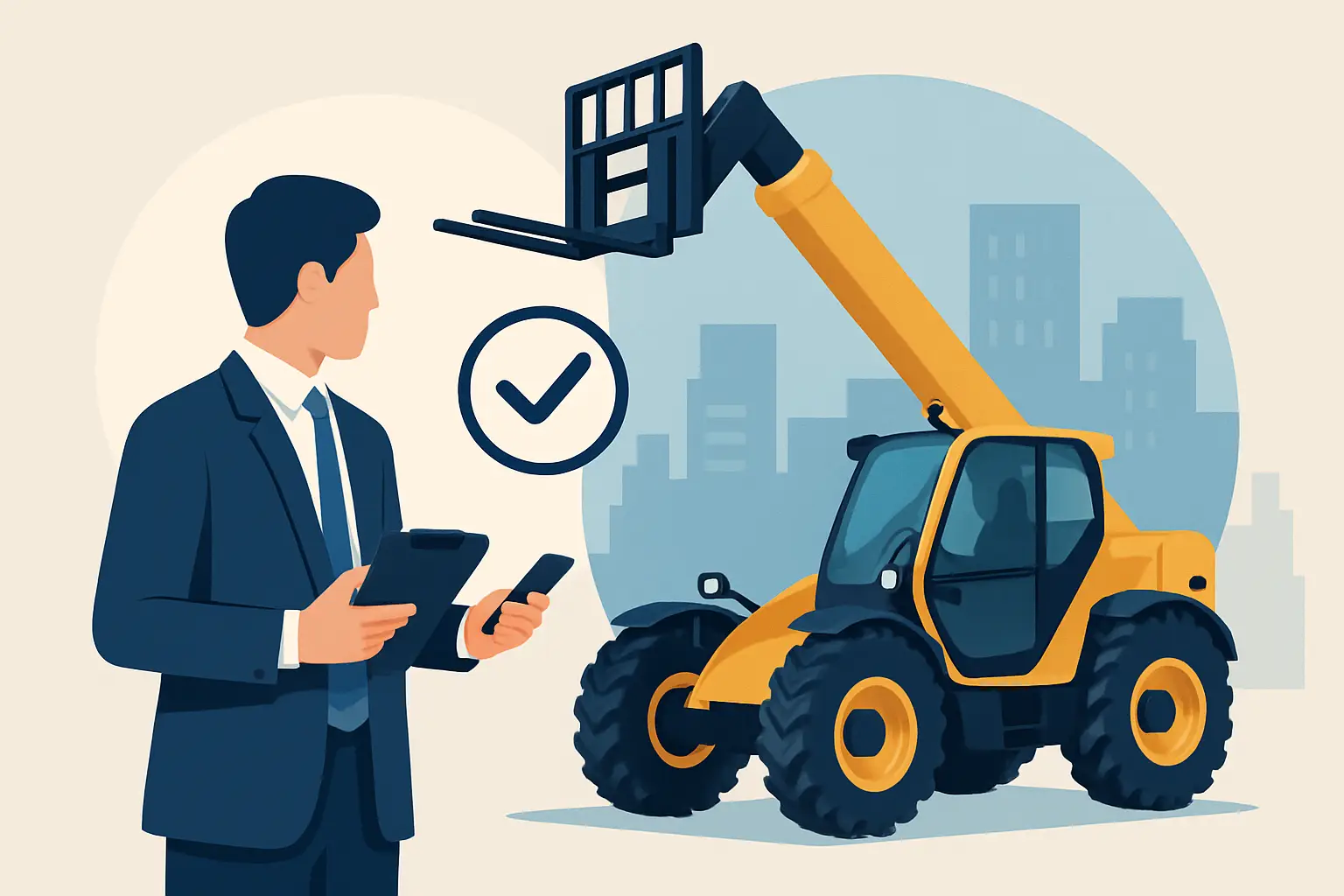
If your operator is waiting on a machine, you are already paying for it. Lost time on a yard job, a housing site, or during silage and grain handling has a habit of spreading - missed lifts, delayed materials, idle labour, and hire costs you never planned.
That is why more buyers choose to buy used telehandler UK stock rather than sit in a long new-build lead time. The smarter play is not simply "used versus new". It is buying a used machine with verified condition, clear history, and a route to delivery that gets it working quickly.
Why buying used makes sense - and when it doesn't
A used telehandler can be the fastest way to increase capacity without tying up capital. For contractors and farms, cashflow usually matters more than having the newest registration plate. A proven machine with sensible hours can deliver strong ROI from week one, especially when you are matching the specification to a real job rather than buying "the biggest we can afford".
There are trade-offs. If your work is highly specialised (continuous heavy lifts at maximum reach, harsh environments, tight weight limits, or strict client compliance), you may decide a new machine with full manufacturer warranty is worth the premium. Used can also be the wrong choice if you cannot tolerate any unplanned downtime and you have no support plan in place.
For most operations, the middle ground wins: buy used, but remove the avoidable risk through inspection, correct spec, and a clean buying process.
The spec that actually drives ROI
A telehandler looks simple on paper: lift capacity, lift height, reach. In reality, the spec affects productivity, safety, and tyre wear every day.
Capacity is not just a headline figure. It drops as you extend the boom, and the load chart matters. If you frequently place pallets onto second-storey scaffolds or stack big bales at height, you need margin. Buying a machine that is "almost enough" is how you end up working slower or pushing limits.
Lift height and forward reach should be chosen for your typical lifts, not the occasional outlier. If you only need 7 metres most days, paying for a 14-metre machine can mean higher purchase price, larger footprint, and extra maintenance cost for capacity you rarely use.
Transmission and hydraulics are where productivity shows up. Powershift, hydrostatic, and torque converter options suit different work styles. Yard shunting and precise placement often favour smoother control; repeated loading work may prioritise durability and speed. If your operators complain about jerky control or slow hydraulics, cycle times suffer and you burn time all day.
Tyres, stabilisers, and chassis configuration are also commercial decisions. Construction sites can demand different tread and stability requirements than farm yards. A machine that is always spinning or sinking is not "cheap" even if the purchase price looks good.
How to judge hours properly
Hours alone do not tell you whether a used telehandler is a good buy. Hours tell you how long the key systems have been working, but they do not tell you how they were treated.
A 6,000-hour machine that has been serviced on schedule, warmed up properly, and kept tight can outperform a 3,500-hour machine that has been thrashed, overloaded, or run with neglected oils. What matters is whether the wear you see matches the hours claimed.
Look for consistency between hour meter, cab wear, joystick condition, pedal wear, boom pad wear, and attachment coupling play. If the machine presents as "tired" but the hours are unusually low, you should slow the process down and verify details.
What to inspect before you buy used telehandler UK machines
Buying used is not a gamble if you inspect with intent. You are trying to confirm two things: the machine is safe and functional today, and the likely future cost is acceptable.
Structure and boom condition
Check the boom for cracks, repairs, and excessive play. Wear pads, chains, and rollers tell you how much life is left and whether it has been run loose. Extend and retract under load if possible and listen for abnormal noise.
Pins and bushes are common wear points. Excess movement at the boom base and carriage translates to sloppy handling and faster component wear. It is not always a deal-breaker, but it should be priced into the purchase.
Hydraulics and steering
Hydraulic leaks are easy to spot, but the bigger issue is performance under pressure. Slow or weak functions can point to pump wear, valve issues, or tired cylinders.
Steering should be tight and predictable. Excess play, strange knocking, or delayed response can indicate wear in joints, axles, or steering rams.
Engine, cooling, and emissions equipment
Cold starts, smoke, and inconsistent idle are strong signals. Cooling system condition matters more than many buyers expect because overheating events shorten engine life quickly.
On newer machines, emissions systems add complexity. If you operate in low-load cycles or short runs, some setups can be less forgiving. This does not mean "avoid newer machines", but it does mean you should buy with a clear understanding of how your duty cycle matches the machine.
Brakes, axles, and drivetrain
Telehandlers live a hard life on uneven ground. Axles and hubs take constant shock loads. Listen for whining, clunks, or vibrations under drive. Check for oil leaks and evidence of water ingress.
Transmission issues can be expensive and disruptive. If shifts are harsh, delayed, or slipping, walk away unless you have clear evidence of rectification and you are comfortable with the risk.
Safety systems and compliance
You need more than "it works". Verify the essential safety functions, lights, alarms, seat switch, and stability-related systems relevant to the model. If you will be using it on sites with strict controls, ensure the machine spec and condition support your compliance requirements from day one.
Attachments: the hidden cost if you get it wrong
A used telehandler is only as productive as the attachments it turns up with. Forks, buckets, grabs, and jibs need to match both the machine and your work.
Check carriage type and compatibility. A bargain machine can become expensive if you then have to source a full attachment set, adapt couplings, or replace worn forks. Inspect attachment wear, locking mechanisms, hoses (for hydraulic attachments), and general condition.
If you run mixed work, buying the right attachment package upfront reduces downtime and avoids last-minute spend.
Buying routes: in-stock vs sourced
If you need a machine quickly, in-stock inventory is the straightforward option: you can confirm spec, check hours, and organise delivery with minimal delay.
Sourcing comes into its own when you need a specific make, capacity, height, tyre type, or budget and you do not want to waste time scrolling through unsuitable options. The risk with sourcing is variability in condition and information quality unless there is a structured inspection process.
A sourcing-led approach works best when you set non-negotiables early: required lift capacity at reach, minimum lift height, maximum transport width/height if you have access constraints, preferred hours band, and any must-have attachments.
Finance and logistics: plan them before you commit
Used equipment is bought for speed and cost control. Delays in finance approval or transport planning undermine both.
If finance is part of the deal, get indicative terms early so you are not choosing a machine that cannot be funded on your timeline. Hire purchase and leasing can protect working capital, but you still need to align payments with the revenue the machine will generate.
Logistics matter just as much. Telehandlers are not pallet deliveries. You need correct haulage, sensible delivery windows, and clear responsibility for loading, unloading, and any inspection on arrival. If the machine is coming from Europe, factor in lead time, documentation, and the practicality of after-delivery support.
How to reduce risk without slowing the purchase
Speed and diligence are not opposites. The best buys happen when the process is controlled.
Start with the job specification, then confirm condition with an inspection that covers function, safety, and wear points. Tie price to verified facts: year, hours, spec, tyres, attachments, and known work required. If anything is uncertain, treat it as a cost until it is proven otherwise.
If you want a service that can supply from stock or source from trusted European channels, with structured inspection, finance options, and managed delivery, AGRORIG LTD does exactly that.
Buying used telehandler UK machines is not about chasing the cheapest listing. It is about getting the right machine on site, ready to work, and keeping your operation moving while everyone else is waiting for lead times.